
Description
Data and Figures
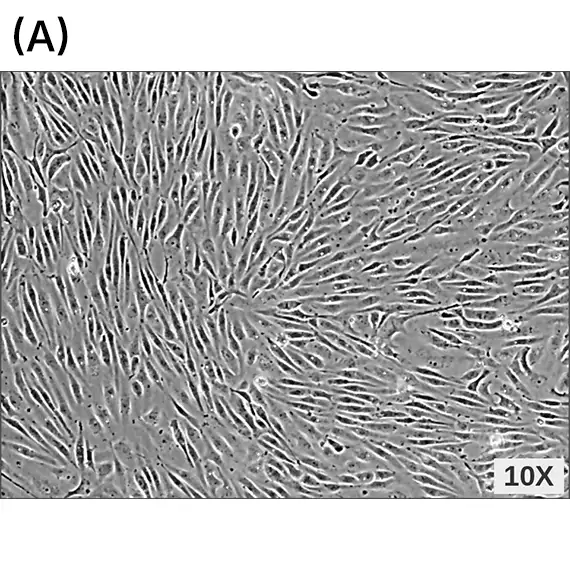
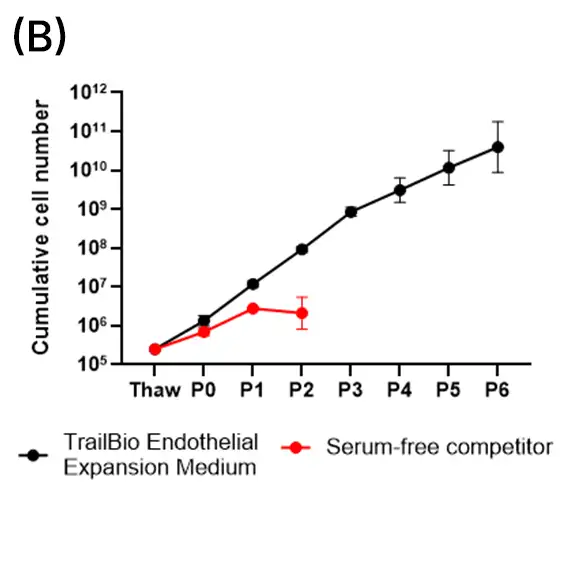
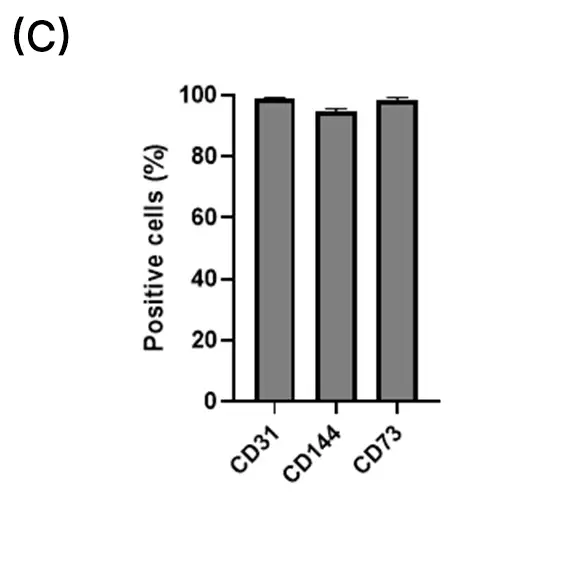
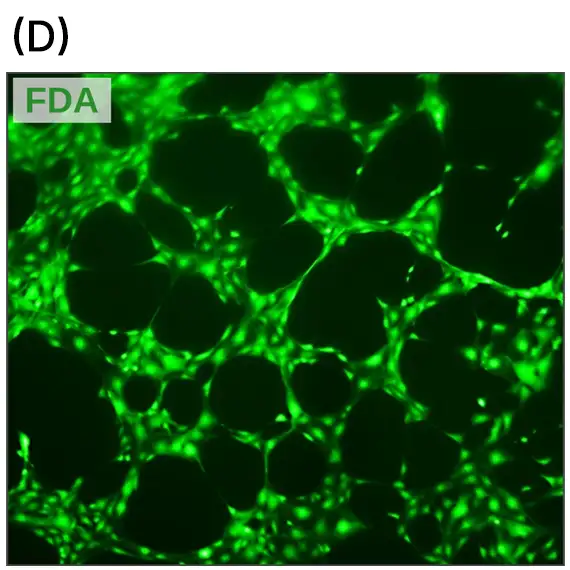
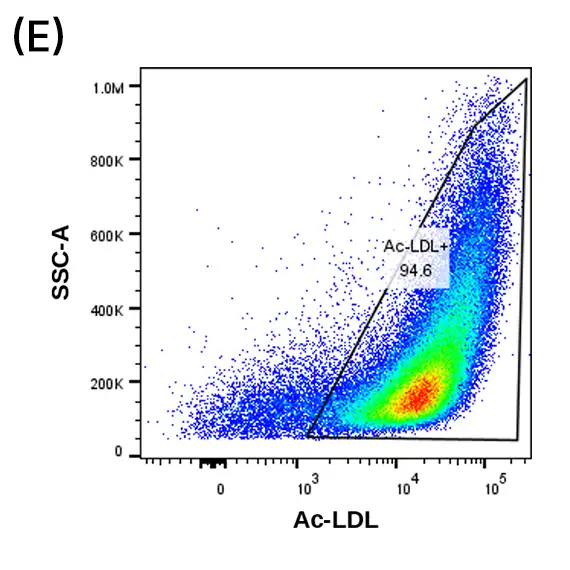
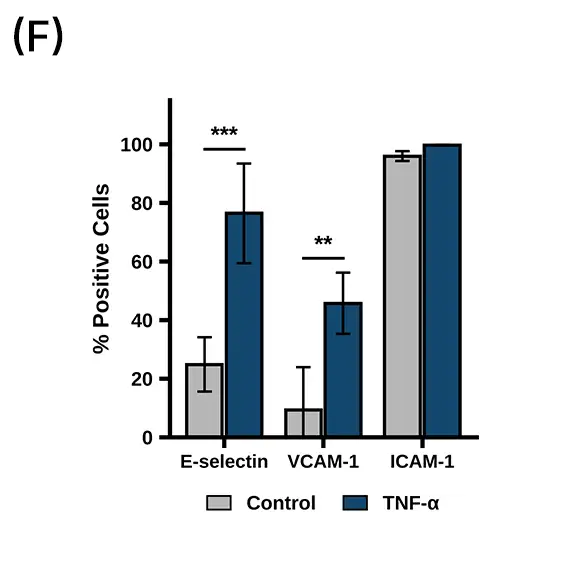
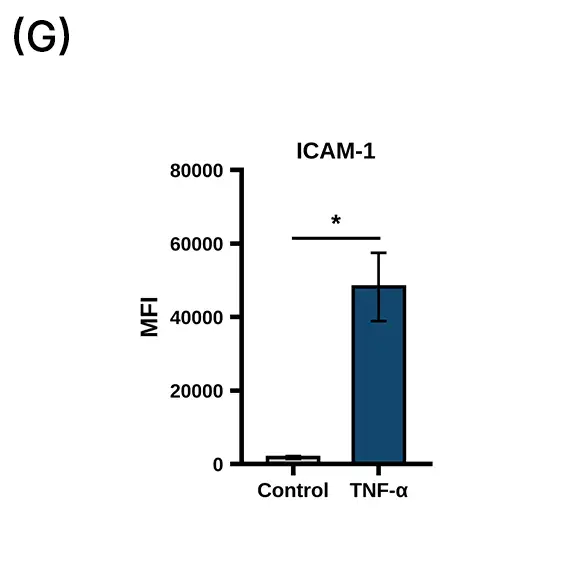
Serum-free expansion of primary endothelial cells (HUVECs)
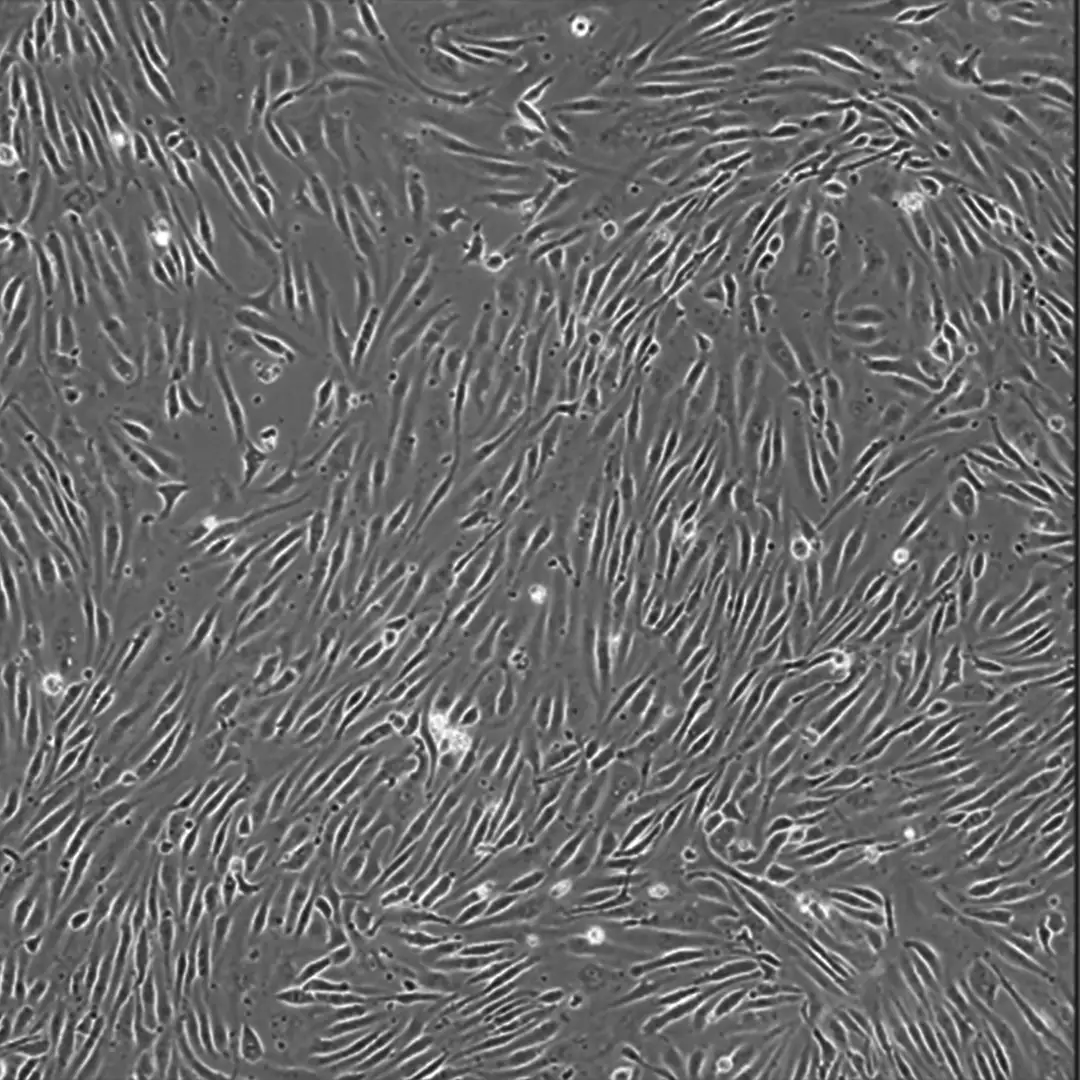
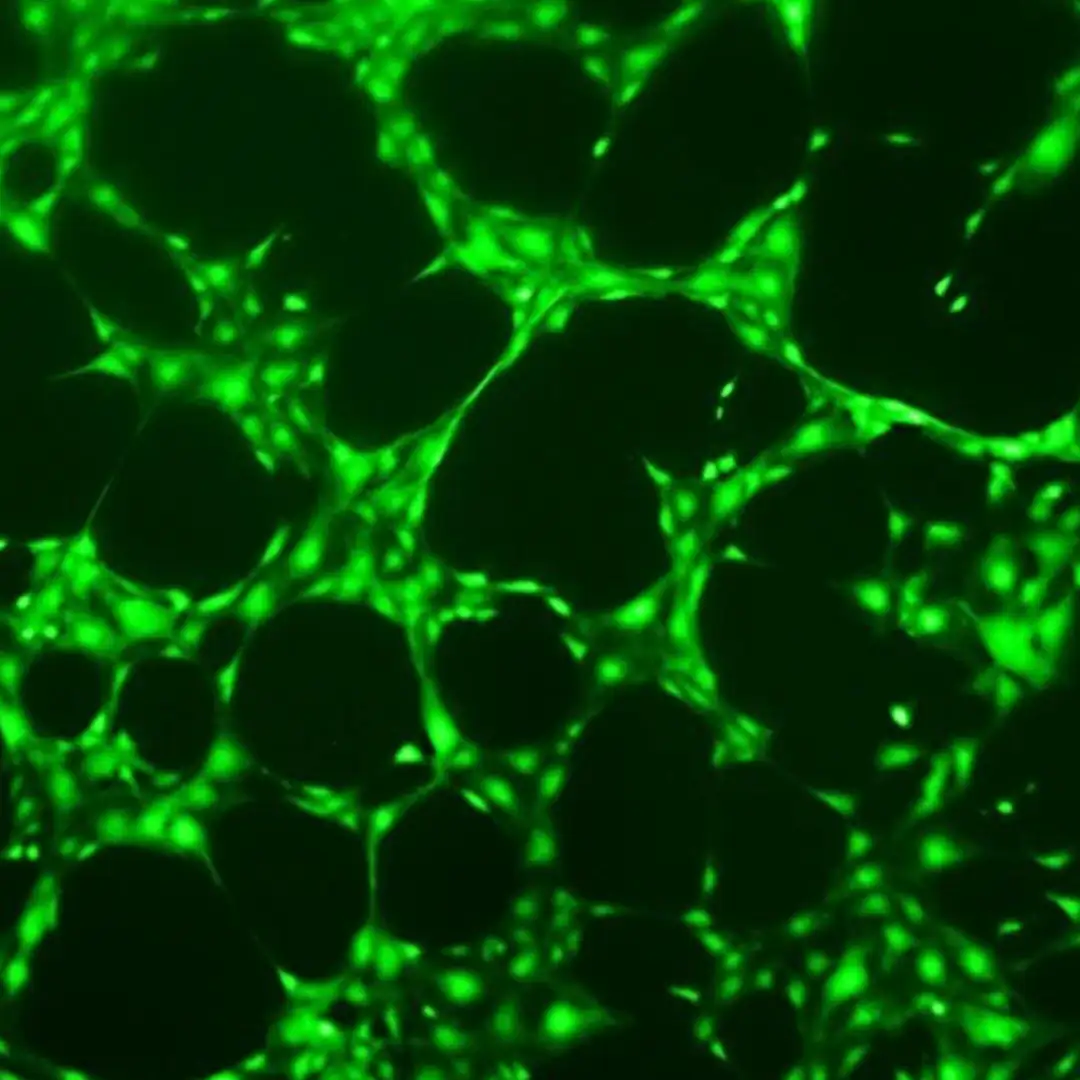
(A) Representative 10× image of HUVECs at passage 6 following expansion in TrailBio® Endothelial Expansion Medium. Cells retained characteristic cobblestone morphology after expansion. (B) Cumulative cell number of HUVECs in TrailBio® Endothelial Expansion Medium and in a competitor serum-free medium. In TrailBio® Endothelial Expansion Medium, HUVECs continued to expand at every passage for a minimum of 6 passages. Experimental conditions were identical across media. (C) Flow cytometric analysis of HUVECs at passage 6 following expansion in TrailBio® Endothelial Expansion Medium. Cells showed high expression of the endothelial markers CD31, CD144 (VE-cadherin), and the venous-associated marker CD73. (D) Fluorescent image of HUVECs at passage 6 following expansion in TrailBio® Endothelial Expansion Medium, stained with fluorescein diacetate (FDA). Cells formed interconnected tubule networks in a tube formation assay. (E) Flow cytometric analysis of acetylated LDL (Ac-LDL) uptake by HUVECs at passage 6 following expansion in TrailBio® Endothelial Expansion Medium. Over 90% of cells were Ac-LDL-positive, indicating preserved endothelial function. (F-G) Flow cytometric analysis of HUVECs at passage 6 following expansion in TrailBio® Endothelial Expansion Medium and stimulated with or without TNF-α (25ng/mL) over 24 hours. (F) TNF-α increased the percentage of cells expressing E-selectin and VCAM-1, while ICAM-1 was expressed by nearly all cells in both conditions. (G) Although the majority of cells expressed ICAM-1, expression per cell increased significantly, as shown by increased mean fluorescence intensity (MFI).
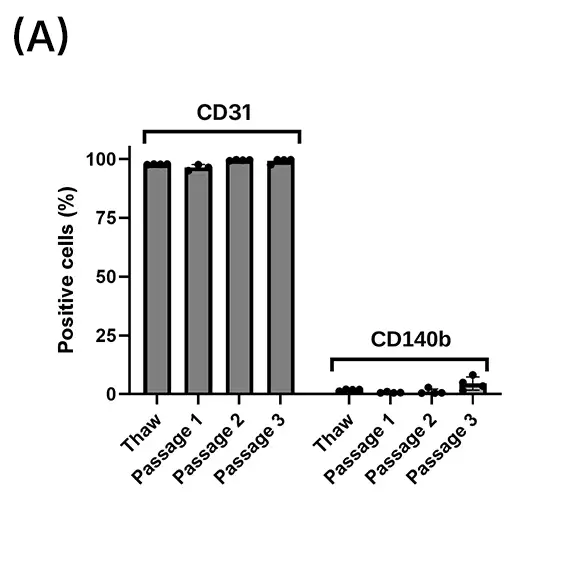
Cell purity and function are maintained following expansion of TrailBio® Endothelial Cells
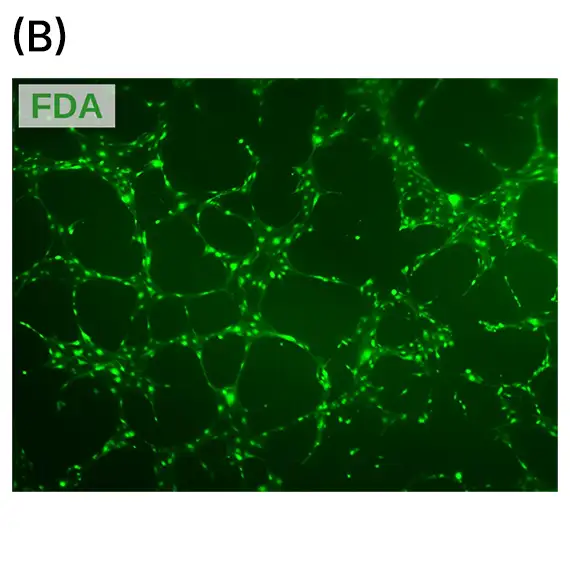
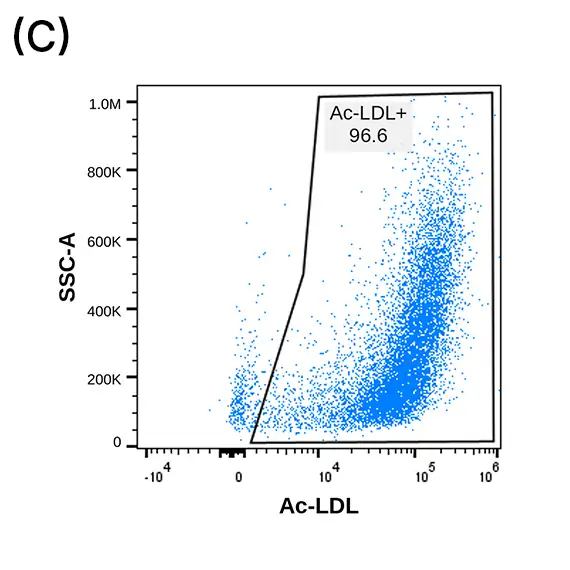
(A) Flow cytometric analysis of TrailBio® Endothelial Cells expanded in TrailBio® Endothelial Expansion Medium from thaw through passage 3. CD31 expression remained ≥95% and CD140b (PDGFR-β) expression remained <5% at every passage, demonstrating maintenance of endothelial purity during expansion. (B) Fluorescent image of TrailBio® Endothelial Cells at passage 3 following expansion in TrailBio® Endothelial Expansion Medium, stained with fluorescein diacetate (FDA). Cells formed robust capillary-like networks in a tube formation assay, indicating retained tube-forming capacity. (C) Flow cytometric analysis of Ac-LDL uptake by TrailBio® Endothelial Cells at passage 3 following expansion in TrailBio® Endothelial Expansion Medium. Over 90% of cells were Ac-LDL-positive.
Greater expansion than alternative endothelial media without compromising iPSC-derived endothelial cell identity
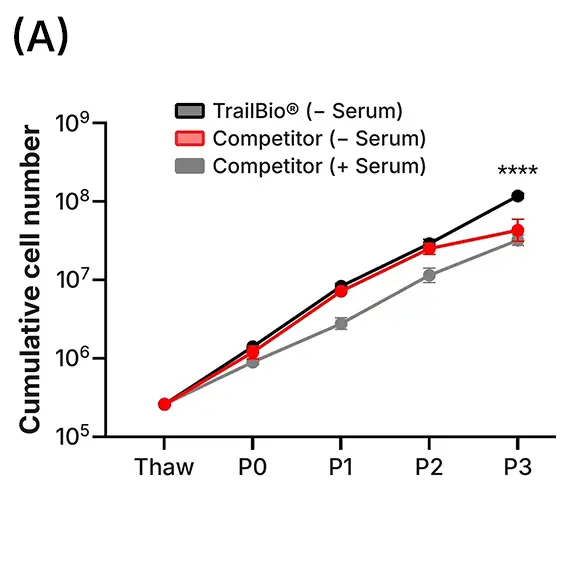
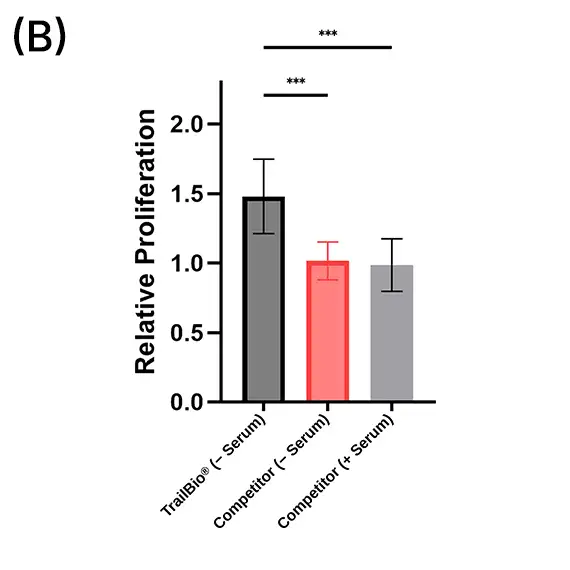
(A) Cumulative cell number of TrailBio® Endothelial Cells from thaw through passage 3 in TrailBio® Endothelial Expansion Medium versus a competitor serum-free medium and a competitor serum-containing medium. Expansion in the competitor serum-free medium slowed after passage 2, and TrailBio® Endothelial Expansion Medium gave a significantly higher cell yield at passage 3 with an average fold change of 4.7 per passage. (B) Relative proliferation at passage 3 was significantly higher in TrailBio® Endothelial Expansion Medium than in either competitor medium using CyQUANT cell proliferation assay.
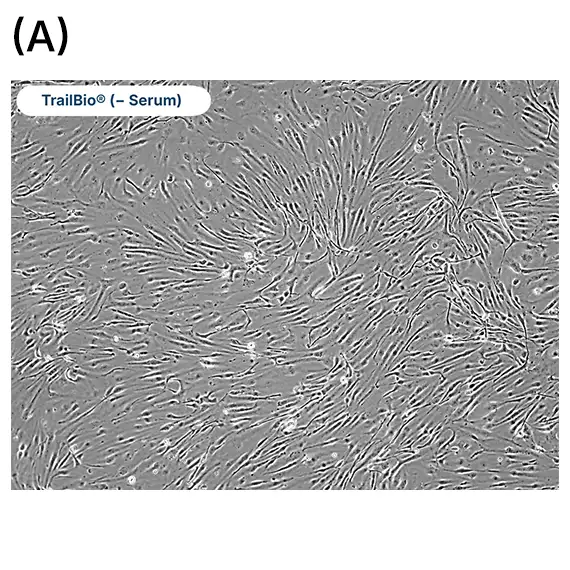
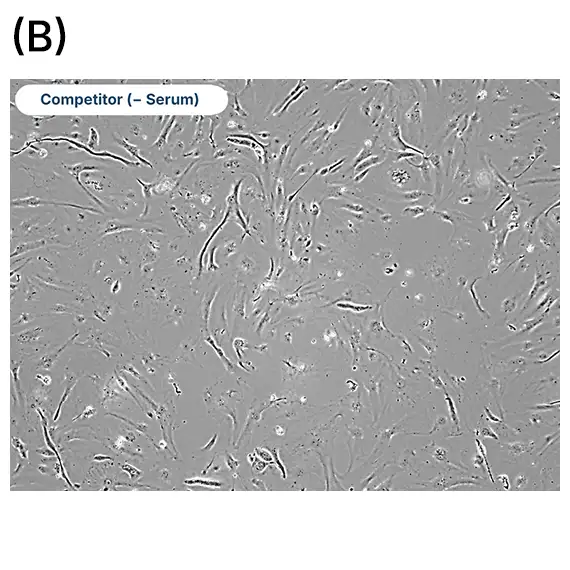
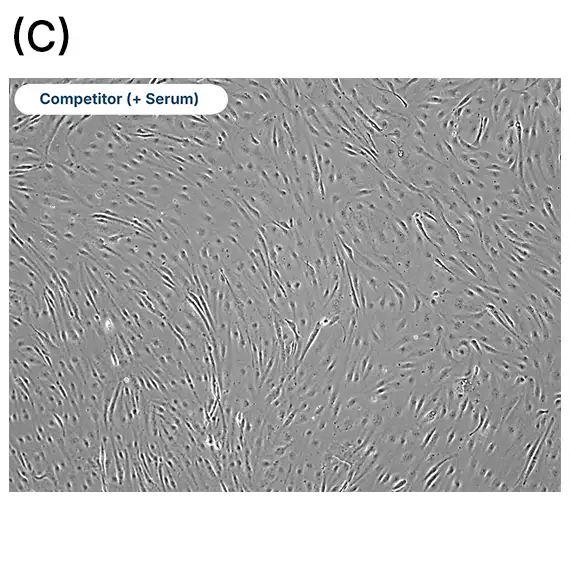
Endothelial morphology maintained under serum-free conditions
(A-C) Representative 10x images of TrailBio® Endothelial Cells at passage 3 following expansion in (A) TrailBio® Endothelial Expansion Medium, (B) a competitor serum-free medium, or (C) a competitor serum-containing medium. Cells cultured in TrailBio® Endothelial Expansion Medium showed morphology and confluency comparable to the competitor serum-containing medium, while cultures in the competitor serum-free medium did not reach confluency by passage 3 at the same timepoint.
Technical Info and Resources
Frequently Asked Questions
What components are included?
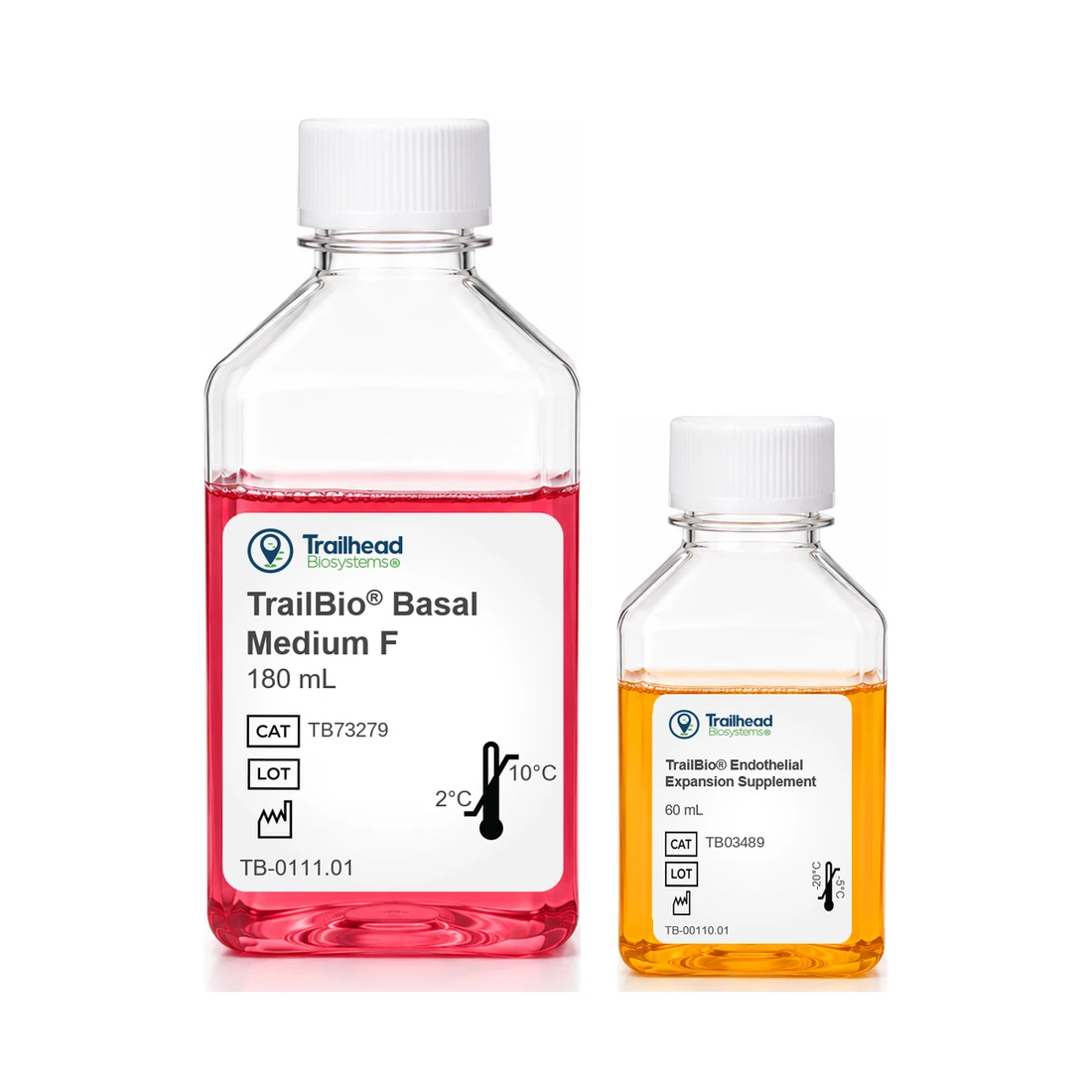
TrailBio® Endothelial Expansion Medium is supplied as one 180 mL bottle of TrailBio® Basal Medium F and one 60 mL bottle of TrailBio® Endothelial Expansion Supplement (4×). Combine the supplement with the basal medium to prepare the complete medium.
Is the medium serum-free?
Yes. TrailBio® Endothelial Expansion Medium is fully serum-free, reducing serum-related lot-to-lot variability and eliminating the need for serum lot qualification.
Can I purchase TrailBio® Endothelial Cells with the medium?
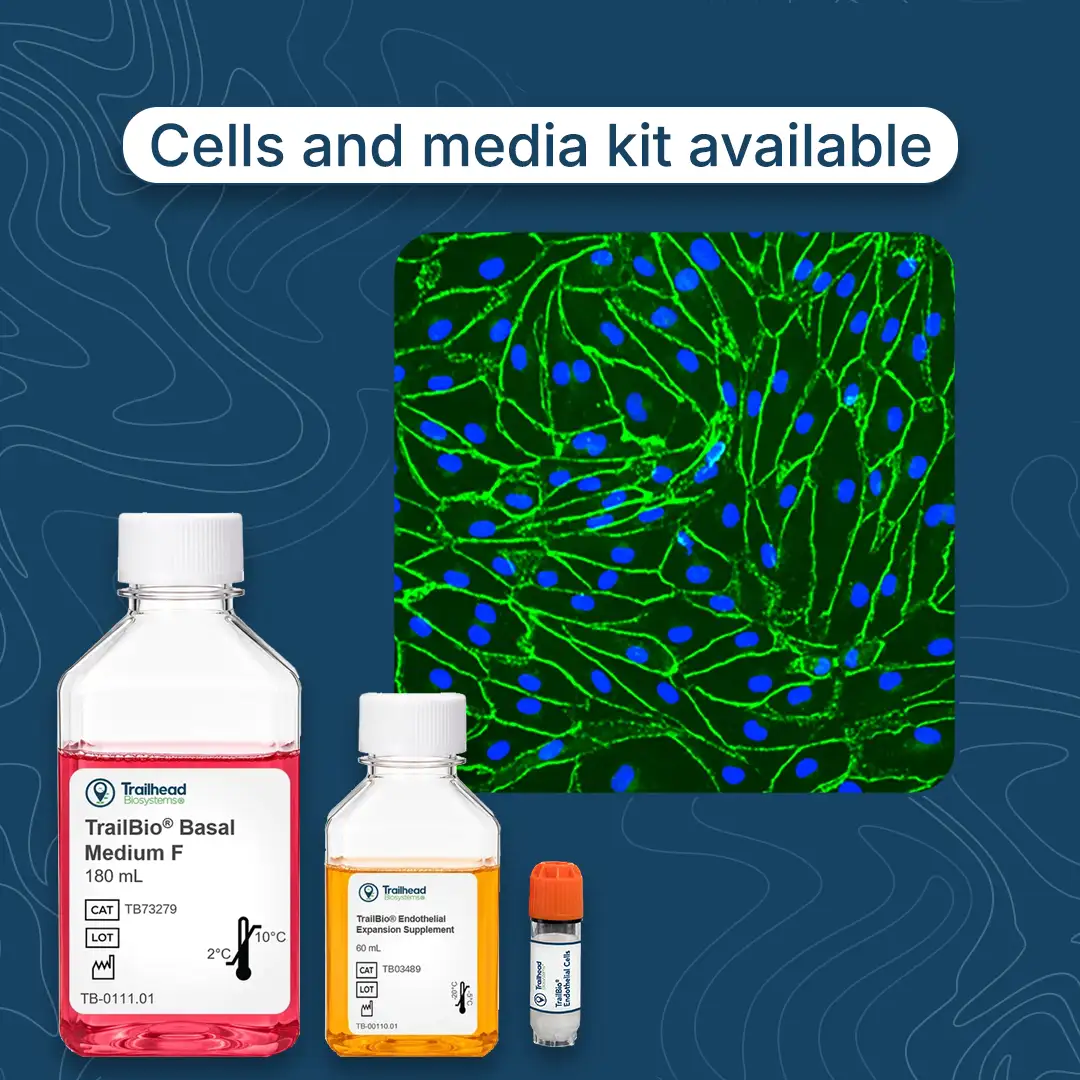
Yes. TrailBio® Endothelial Cells are available separately or with TrailBio® Endothelial Expansion Medium as the TrailBio® Endothelial Cells Kit (catalog no. TB86123).
Can the same medium be used for thawing, expansion and functional assays?
Yes. TrailBio® Endothelial Expansion Medium supports post-thaw recovery, routine expansion, tube formation assays, Ac-LDL uptake studies, and TNF-α inflammatory response assays.
How does TrailBio® Endothelial Expansion Medium compare with alternative endothelial media?
With HUVECs, TrailBio® Endothelial Expansion Medium supported continued expansion at every passage through passage 6 across different donors, and gave higher cumulative cell numbers than a competitor serum-free medium. In side-by-side studies using iPSC-derived TrailBio® Endothelial Cells, TrailBio® Endothelial Expansion Medium produced higher cell yield and proliferation through passage 3 than a competitor serum-free medium and a competitor serum-containing medium. It also maintained consistently high CD31 expression and a low CD140b-positive off-target population across passages.
Additional Information
| Product | |
|---|---|
| Format | Two-component system: one bottle of basal medium and one bottle of 4× supplement |
| Basal medium | TrailBio® Basal Medium F, 180 mL |
| Supplement | TrailBio® Endothelial Expansion Supplement (4×), 60 mL |
| Prepared complete medium | Mix the 4× supplement with the basal medium to prepare 240 mL of 1× TrailBio® Endothelial Expansion Medium. |
| Serum Content | Serum-free |
| Handling and usage | |
| Storage | Basal medium: 2–10 °C · Supplement: −20 °C · Prepared complete medium: 2–10 °C, protected from light |
| Prepared complete medium stability | ≤14 days at 2–10 °C, protected from light |
| Shipping | Basal medium on ice packs · Supplement on dry ice |
| Shelf life | Basal medium: 6 months · Supplement: 6 months (at recommended storage temperatures) |
| Usage | Research use only |
| Validation | |
| Cell types | HUVECs; TrailBio® Endothelial Cells |
| Applications | Supports a range of endothelial cell workflows, including post-thaw recovery, routine expansion, tube formation, Ac-LDL uptake, and inflammatory (TNF-α) response assays |
| Ordering | |
| Catalog number | TB99709 (kit, 240 mL) |
| Price | $199.00 |

